For over three decades I have worked at the front lines of industrial operations — as a field technician, engineer, manager, and in development roles — building deep, hands-on expertise in process safety, occupational safety, and enterprise asset efficiency.
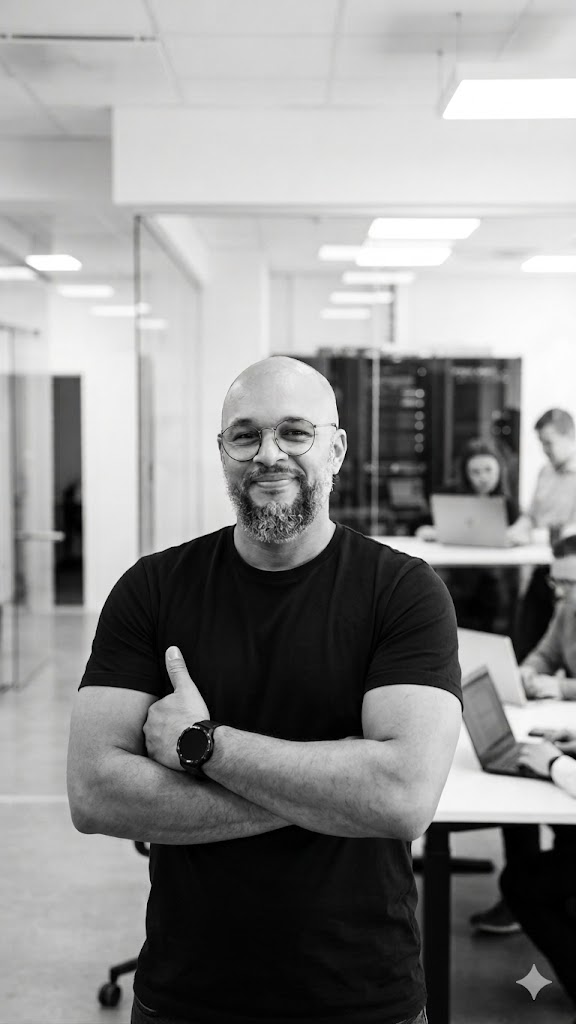
That career has been built inside companies recognised as best-in-class in their fields, and thirty-plus years in real plants and on real sites have taught me what keeps complex industrial environments running: rigorous safety standards, well-engineered processes, and assets that deliver their full value across their entire lifecycle.
I have combined my industrial foundation with the serious software engineering capability I have built up over the past 15 years — backend development, database design and data management, and real-time analysis of large-scale operational data. This dual background lets me close the gap that slows so many industries down: the gap between the physical realities of operations and the digital tools meant to support them.
I also work with a trusted network of top subject-matter experts. No single person can be world-class in every discipline an industrial client needs, and I don't pretend otherwise. When a project calls for specialised depth — be it instrumentation, functional safety, advanced analytics, control systems, or a particular regulatory domain — I bring in the right expert for the job. The result is the agility of working with one accountable partner, backed by the depth of a wider expert bench.
— Somaina Odiah, SupaBrightMany organizations never see the real cost of bad software and poor integration — the missing communication between the tools they rely on daily. Because it's spread across countless small delays, it hides in plain sight. Yet research and experience put that cost at 11–20% of productive time — over an hour lost every working day to slow systems, clunky interfaces, and disconnected tools.
That's because the loss doesn't show up where leaders look. It isn't fewer units made or fewer cases closed — those are production numbers, the output of the work. The damage happens one layer upstream, in how the work gets done: the minutes spent waiting, re-entering the same data, hunting through menus, and working around tools that don't fit. Good people and solid processes can still bleed productivity, purely because the software sits between them and the job.
See how the 8 Lean wastes translate into your software usage — and where your organization might be losing productivity:
Errors caused by the tool: data-entry mistakes, syncing failures, redoing work because something didn't save, fixing bad autocomplete or autofill, cleaning up duplicate records. Anything you have to redo counts.
Generating output nobody needs: reports auto-emailed to people who don't read them, exporting data 'just in case', creating files, notifications and dashboards that pile up unused, CC-ing everyone on everything.
The classic one: loading spinners, slow page loads, waiting for a sync, for a report to generate, for the VPN to connect, for a colleague to finish editing a shared doc, for an approval to come through a workflow tool.
Using 5% of a powerful tool because nobody learned the rest — doing manually what the software could automate, not knowing the shortcuts or features that already exist. The capability is there and untapped.
Moving data between systems that don't talk to each other: copy-pasting from email to spreadsheet to CRM, re-keying the same information into multiple apps, exporting from one tool to import into another.
Digital clutter and backlog: unread notifications, a 10,000-message inbox, hundreds of open tabs, files in dozens of half-organized folders, tasks piling up in a tracker. Stored-up stuff you have to wade through.
Excessive clicking, scrolling and navigating: too many clicks for one task, constantly switching between apps, hunting through menus, searching for where a setting lives, toggling between windows.
Doing more steps than the task needs: filling in fields nobody uses, manual formatting the software could do, redundant data entry, approval steps that add no value, using a heavyweight tool for a trivial job.
Pick any waste to see how it plays out — together, the eight spell DOWNTIME.
The numbers behind the productivity drain are striking:
The average worker loses 30 to 46 minutes every day to poor technology and software-related delays.
When a software glitch interrupts work, employees spend an average of 25 minutes regaining their workflow.
Information workers lose roughly 4.5 hours per week hunting for documents scattered across disconnected applications.
Depending on how severe the problems are, this adds up to losing 21 to 76 working days per employee, every year.
In industrial settings the stakes are higher still. When the tools meant to support safety-critical decisions and asset performance are slow, fragmented, or unreliable, the cost is not just lost minutes — it is lost safety margin, lost output, and lost trust in the very systems people depend on.
Every system we design, every process we improve, and every line of code we write starts with one question: does this make the operation safer? Decades in real industrial environments have taught us that safety is not a feature you add at the end — it is the foundation everything else is built on.
We improve process efficiency through connected application ecosystems and advanced automation. Isolated tools and disjointed workflows are at the heart of the productivity problem. We build integrated environments where data flows where it needs to, automation handles the repetitive work, and people are free to focus on the decisions that actually matter.
Fast to use, always a step ahead. Never the thing you wait on.
Clear from day one. Works better than you'd expect.
Measure, analyze, improve. Always know where you stand.
Like a Swiss clock. Set it, trust it, never second-guess it.
No clutter, no excess. Just what creates value.
Less friction, more done. Every time.
Our company brings industrial reality and software engineering together — supported by a network of the best specialists in their fields — so the systems your people use every day actually help them do their best work: safely, quickly, and with confidence.
Get in touch to talk about safety, productivity, and the tools your people deserve.